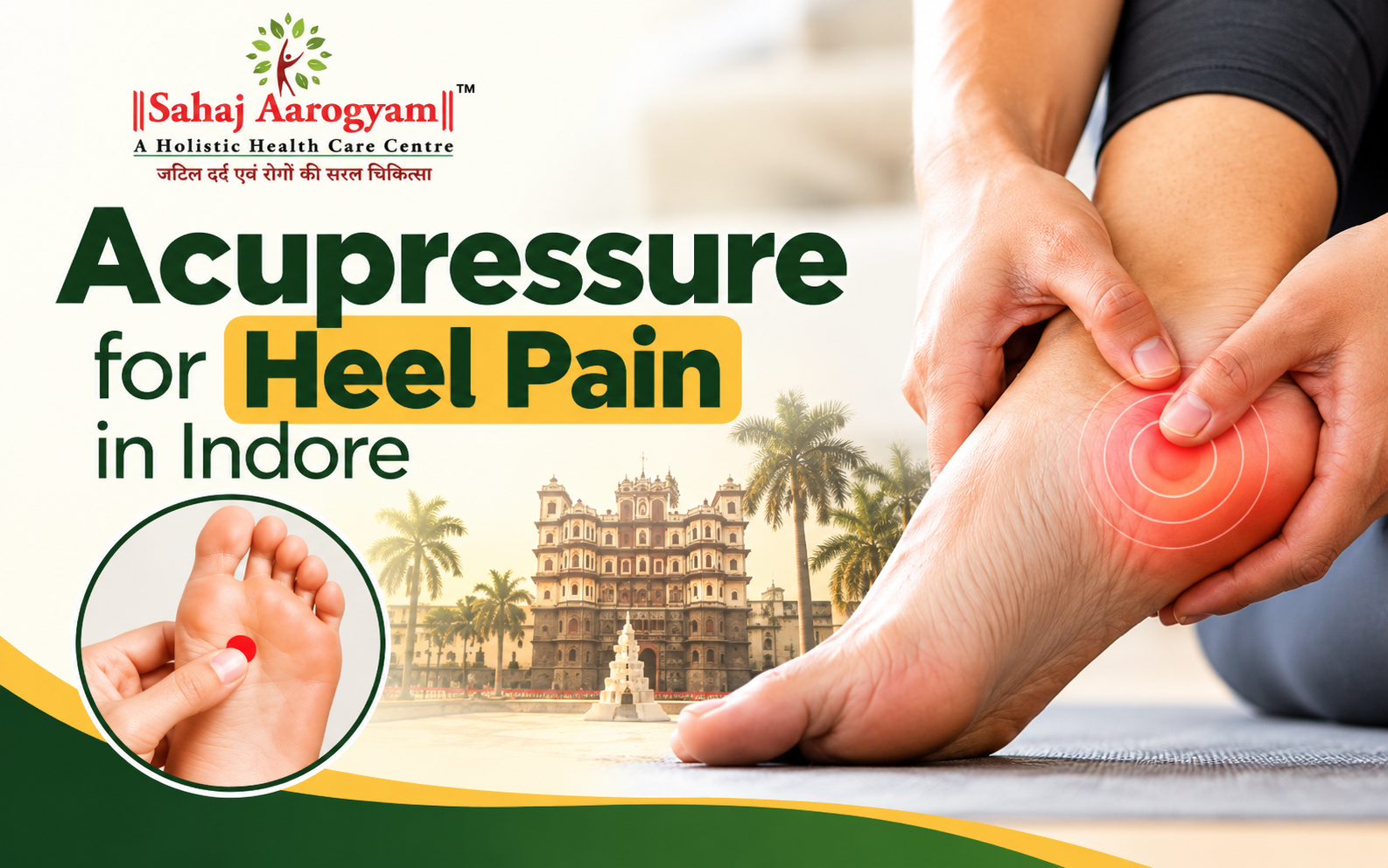
Heel pain can make the first steps in the morning, standing for long periods or walking across a room uncomfortable. It may begin gradually or appear after a change in activity, footwear or exercise routine. Because heel pain has several possible causes, it is important to understand the pattern of symptoms rather than assuming that one treatment will suit everyone.
Acupressure for heel pain in Indore may interest people looking for a complementary approach to comfort and wellbeing. Acupressure uses manual pressure rather than needles, but it should not replace an assessment when pain is persistent, severe or linked to an injury. At Sahaj Aarogyam, you can enquire about available complementary therapy services and discuss whether an approach is appropriate for your needs.
Where Does Heel Pain Usually Occur?
Pain under the heel, around its back or along the inner edge can point to different issues. Discomfort under the heel that is strongest with the first steps after rest is commonly associated with plantar heel pain, which may involve the plantar fascia. Pain at the back of the heel can sometimes involve the Achilles tendon or nearby structures.
These patterns are clues, not a diagnosis. A healthcare professional may ask when the pain began, recent activity changes, footwear, previous injuries and whether swelling, redness, tingling or numbness is present. An examination helps decide whether further tests or a specific treatment plan are needed.
Common Reasons for Heel Discomfort
One frequent cause of pain beneath the heel is plantar fasciopathy, involving irritation or changes in the plantar fascia—a strong band of tissue that supports the arch of the foot. Other possible causes include Achilles tendinopathy, bursitis, stress injury, nerve irritation, inflammatory conditions or a bruise to the heel pad.
Long periods of standing, a sudden increase in walking or running, and footwear that does not suit the activity may contribute to symptoms in some people. Diabetes, circulation problems or reduced sensation can make foot symptoms more important to assess promptly. Do not self-diagnose based only on the location of pain.
What Is Acupressure?
Acupressure is a hands-on practice in which pressure is applied to selected areas of the body. Unlike acupuncture, it does not use needles. The pressure may be applied with fingers, thumbs or other appropriate techniques, depending on the practitioner and the individual.
Evidence specifically supporting acupressure as a treatment for the underlying causes of heel pain is limited. It should therefore be described as a possible complementary comfort measure—not as a proven way to repair the plantar fascia, tendon or another injured structure. A practitioner should explain the intended purpose, limitations and alternatives before starting.
Can Acupressure Be Part of a Heel-Pain Care Plan?
Whether acupressure is suitable depends on the cause of the pain, the condition of the foot and your overall health. It may be discussed as an adjunct for comfort in selected cases, but it should not involve forceful pressure over a very painful, swollen, bruised or injured area.
A well-rounded plan may also include activity adjustments, suitable footwear, gradual return to exercise and exercises recommended by a qualified clinician. If the assessment suggests plantar heel pain or an Achilles problem, a physiotherapist or medical professional can guide condition-specific management. Treatment should focus on the actual cause and the person’s functional goals.
Everyday Measures That May Help
Temporarily reduce activities that sharply increase pain, while avoiding unnecessary complete inactivity unless a clinician advises it. If walking or running has increased quickly, consider a gradual return rather than immediately resuming the previous volume.
Wear comfortable, supportive footwear appropriate for your activities. Some people find a cushioned heel or an appropriate insole helpful, although the best option varies. Gentle calf and foot exercises may be recommended for certain conditions; use guidance that matches your diagnosis and avoid exercises that cause a marked increase in pain.
If the heel is sore after activity, a cold pack wrapped in a cloth may offer short-term comfort. Do not apply ice directly to the skin. People with reduced foot sensation or circulation problems should seek professional advice before using temperature-based treatments.
When Should You Get Your Heel Checked?
Arrange a clinical assessment if heel pain is severe, keeps returning, is getting worse, affects your normal walking or does not improve with simple changes. Seek prompt medical advice if you have diabetes, reduced sensation, poor circulation, an open wound, significant swelling or redness, or signs of infection.
Get urgent care if you cannot bear weight after an injury, the foot looks deformed, there is sudden severe pain after a pop or snap, or you develop fever with a hot, red and swollen area. Do not delay assessment to try acupressure or another complementary therapy.
Exploring Complementary Therapy at Sahaj Aarogyam
Choosing a therapy should begin with a clear understanding of the symptoms and the likely cause. Sahaj Aarogyam provides wellness and complementary therapy services in Indore. If you are considering acupressure for heel pain, contact the centre to confirm whether the service is currently available, who provides it, and whether it is suitable alongside any medical or physiotherapy care you are receiving.
You can review the centre’s Alternative Therapies service: https://sahajaarogyam.com/sahaj-main/public/index.php/services/alternative-therapies and About Us page: https://sahajaarogyam.com/sahaj-main/public/index.php/about-us. For current business information, visit https://www.sahajaarogyam.com/ or its Google Business Profile: https://share.google/YeVYpNSmi6vLoMeJE. Share your symptoms and any relevant diagnosis when enquiring so the team can guide you appropriately.
Conclusion
Heel pain can arise from several conditions, and the right response depends on its location, duration, severity and effect on walking. Acupressure may be explored as a complementary comfort option in selected circumstances, but evidence for treating the underlying causes of heel pain is limited. It should not replace diagnosis, rehabilitation or medical care when these are needed.
If you are searching for acupressure for heel pain in Indore, begin with an appropriate assessment and ask a qualified practitioner about the benefits, limitations and safety of each option. A thoughtful, individualised plan is more useful than relying on a single technique.
Frequently Asked Questions
Can acupressure cure heel pain?
There is not strong evidence that acupressure cures the underlying causes of heel pain. It may be discussed as a complementary comfort measure, but it should not replace appropriate diagnosis or treatment.
Is acupressure the same as acupuncture?
No. Acupressure uses manual pressure on selected areas, while acupuncture involves inserting fine needles by a qualified practitioner.
Can acupressure help with plantar fasciitis?
Evidence specifically for acupressure in plantar fasciitis is limited. A clinician can recommend a plan that may include activity changes, suitable footwear and condition-specific exercises.
Why does my heel hurt when I get out of bed?
Pain with the first steps after rest is a common pattern in plantar heel pain, but other causes are possible. Persistent symptoms should be assessed rather than self-diagnosed.
Should pressure be applied directly to a painful heel?
Avoid forceful pressure over a very painful, swollen, bruised or injured area. Ask a qualified practitioner whether any hands-on technique is appropriate.
Can footwear affect heel pain?
Footwear that is uncomfortable or unsuitable for your activity may contribute to symptoms for some people. Supportive, comfortable shoes may help, but the best choice depends on the cause.
Should I keep walking if my heel hurts?
Modify activities that sharply worsen pain and seek guidance if walking is affected. The right level of activity depends on the cause and severity of the symptoms.
When should heel pain be checked by a doctor?
Get assessed if pain is severe, worsening, recurring or affecting normal walking. Seek prompt advice for diabetes, reduced sensation, circulation problems, wounds, redness or significant swelling.
Can physiotherapy help heel pain?
Physiotherapy may help when the assessment identifies strength, mobility or loading factors that can be addressed with an individual plan. The approach depends on the diagnosis.
How can I enquire about acupressure at Sahaj Aarogyam?
Visit Sahaj Aarogyam’s official website or Google Business Profile to check current services and contact details. Confirm availability and suitability before scheduling.