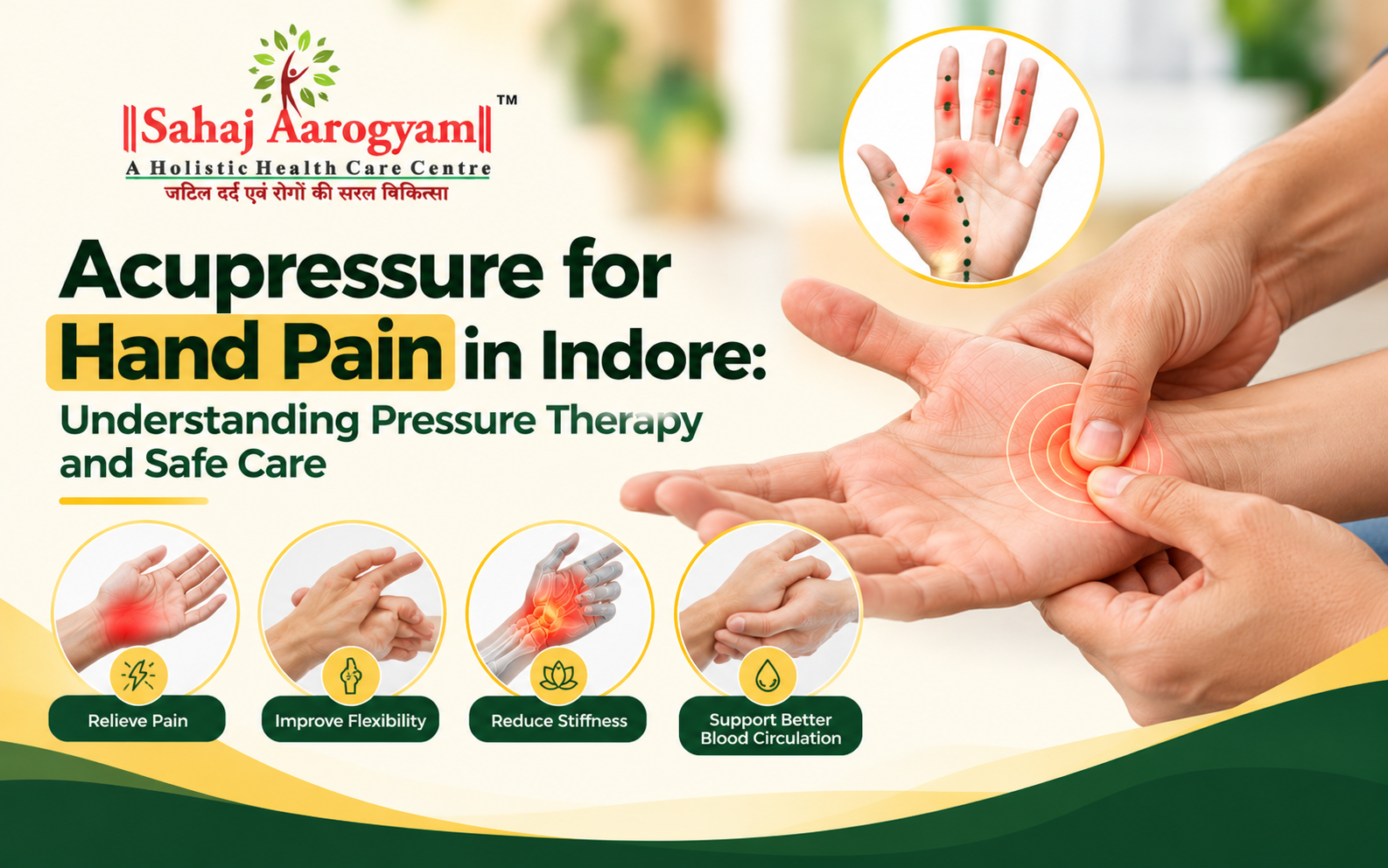
Acupressure for hand pain in Indore may interest people exploring complementary approaches to discomfort. Acupressure involves applying pressure to selected points, but it should not be treated as a universal solution or a substitute for diagnosis. At Sahaj Aarogyam, alternative therapies can be discussed alongside appropriate assessment to help determine which care options are suitable.
What Is Acupressure?
Acupressure is a traditional complementary technique that applies manual pressure to selected points on the body. Practitioners may use fingers or thumbs, with the method and pressure varying according to the approach and the person's needs. It is different from acupuncture, which uses fine needles.
Research on acupressure varies by condition, and evidence for hand pain specifically is limited. Any potential benefit should be considered cautiously. Pressure therapy cannot repair a fracture, treat every tendon or joint condition, or reliably address nerve compression on its own.
Common Reasons for Hand Pain
Hand pain is a symptom, not a diagnosis. Possible causes include:
· Repeated gripping or prolonged use of tools and devices.
· Strains or sprains following an awkward movement or injury.
· Joint conditions that cause stiffness, swelling or tenderness.
· Tendon irritation that worsens with particular movements.
· Nerve-related problems that may cause tingling, numbness or weakness.
· Conditions affecting the wrist or forearm that refer discomfort into the hand.
The location of pain and activities that trigger it can provide useful information, but they cannot confirm the cause. A clinical assessment is important when symptoms persist, recur or interfere with daily function.
When Might Acupressure Be Considered?
A qualified practitioner may discuss acupressure as a complementary option for selected cases of uncomplicated muscle discomfort, after considering the person's symptoms and medical history. It should not delay assessment of unexplained pain or replace care recommended for an underlying condition.
Avoid pressing directly on an injured, swollen, bruised, inflamed or numb area. Do not apply strong pressure over a suspected fracture, open wound, infection or recent surgical site. People with reduced sensation, circulation concerns or complex medical conditions should seek professional advice before trying pressure techniques.
What to Expect from an Assessment
A careful consultation may review when the pain started, its exact location, whether it followed an injury and which movements make it worse. The practitioner may ask about grip strength, stiffness, swelling, tingling, numbness, work activities and previous health concerns.
If symptoms suggest a fracture, significant tendon injury, infection or nerve problem, medical evaluation may be needed before complementary therapy. Sudden weakness, rapidly increasing swelling, severe pain or a hand that becomes pale, blue or cold requires urgent attention.
A Broader Approach to Hand Discomfort
Care depends on the underlying cause. When appropriate, a healthcare professional may recommend activity modification, suitable exercises, rehabilitation, medical treatment or another targeted approach. Acupressure, if considered, should be one part of a carefully selected plan rather than the only response to persistent pain.
1. Adjust aggravating activities
Notice which tasks increase discomfort and consider short breaks or changes in grip where practical. Avoid repeatedly pushing through sharp pain. If a specific work task triggers symptoms, a clinician may help identify suitable modifications.
2. Follow condition-specific movement advice
Gentle movement or strengthening may be useful for some conditions, but not all hand injuries should be exercised immediately. Follow professional guidance, particularly after trauma, surgery or when swelling and weakness are present.
3. Review progress
Track whether everyday tasks become easier, remain unchanged or worsen. Persistent symptoms, new tingling or reduced grip strength deserve reassessment instead of repeated self-treatment.
Acupressure and Alternative Therapies at Sahaj Aarogyam
Sahaj Aarogyam offers an integrated healthcare approach in Indore, including alternative therapy services. If you are considering acupressure for hand discomfort, discuss your symptoms and any existing diagnosis with the centre so that suitability and appropriate next steps can be considered.
Official website: https://www.sahajaarogyam.com/
Alternative therapies: https://sahajaarogyam.com/sahaj-main/public/index.php/services/alternative-therapies
Google Business Profile: https://share.google/YeVYpNSmi6vLoMeJE
Frequently Asked Questions
1. Can acupressure help with hand pain?
Some people explore it as a complementary approach, but evidence for hand pain is limited and results may vary. The cause of pain should be assessed.
2. Is acupressure the same as acupuncture?
No. Acupressure uses manual pressure on selected points, while acupuncture uses fine needles.
3. Can I press points on my hand myself?
Avoid forceful pressure and do not press over an injury, swelling, numbness or unexplained pain. Ask a qualified practitioner for individual guidance.
4. Can acupressure treat a fracture?
No. A suspected fracture needs medical assessment and appropriate treatment; pressure therapy is not a substitute.
5. What if hand pain includes tingling or numbness?
These symptoms may indicate nerve involvement and should be assessed, especially if persistent or worsening.
6. Should acupressure hurt to work?
Strong or painful pressure is not a sign that a treatment is working. Stop if pressure increases pain or causes new symptoms.
7. Can repetitive work cause hand pain?
Repeated gripping and hand-intensive activities may contribute to discomfort, although other causes are possible.
8. When should I seek urgent medical care?
Seek urgent care for severe injury, deformity, rapidly increasing swelling, an open wound, marked weakness or a pale, blue or cold hand.
9. Can acupressure be combined with physiotherapy?
Some complementary approaches may be considered alongside rehabilitation when appropriate, but the plan should reflect the diagnosis and clinical advice.
10. Where can I ask about acupressure services in Indore?
Contact Sahaj Aarogyam to discuss your concerns and ask whether its alternative therapy services may be suitable.