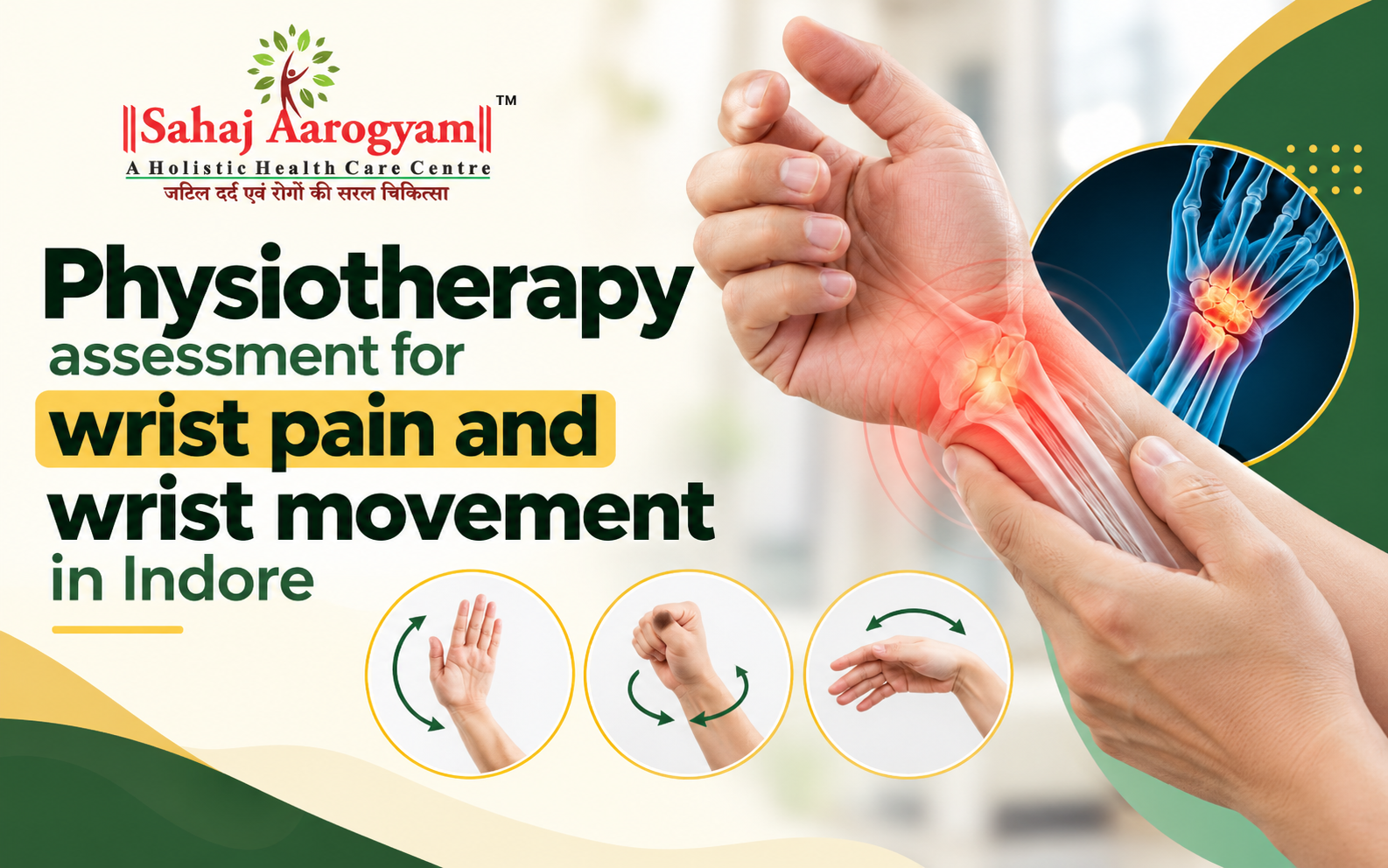
Wrist pain physiotherapy in Indore may be considered when discomfort, stiffness or reduced movement affects everyday activities. A suitable assessment can help identify movement limitations and determine whether physiotherapy is appropriate or whether medical evaluation is needed first. At Sahaj Aarogyam, physiotherapy and rehabilitation services can be discussed in relation to your symptoms, daily demands and recovery goals.
What Can Cause Wrist Pain?
Wrist pain is a symptom rather than a diagnosis. Possible causes include a strain, sprain, tendon irritation, joint inflammation, repetitive loading or an injury involving bones or ligaments. Pain can also be associated with conditions such as carpal tunnel syndrome, which may cause tingling, numbness or weakness in parts of the hand.
The location and timing of symptoms can offer clues, but they do not confirm the cause. Pain near the thumb may have different explanations from pain on the little-finger side of the wrist. A fall onto the hand, sudden swelling or an inability to use the wrist may require prompt medical assessment rather than exercises at home.
Symptoms That May Affect Daily Activities
Wrist problems can feel different from one person to another. Common concerns include:
· Pain when gripping, twisting, lifting or pushing up from a chair.
· Stiffness or reduced movement when bending the wrist.
· Tenderness, swelling or discomfort around a particular area.
· Reduced confidence when carrying objects or completing household tasks.
· Tingling, numbness or altered sensation in the fingers.
· Symptoms that increase during repeated typing, tool use or other hand-intensive activities.
Numbness, tingling or weakness may indicate nerve involvement and should be assessed. Severe pain after an injury, visible deformity, significant swelling, an open wound, or a hand that becomes pale, blue or cold requires urgent medical care.
When Is Physiotherapy Assessment Useful?
A physiotherapy assessment may be useful when a wrist condition has been assessed as suitable for rehabilitation, or when a healthcare professional recommends physiotherapy as part of recovery. The practitioner may ask how symptoms started, which movements are difficult, whether you have had a previous injury and how pain affects work, sleep, sport or daily responsibilities.
Depending on the situation, the assessment may consider wrist and forearm movement, grip function, strength, swelling and tasks that reproduce symptoms. The practitioner should also screen for signs suggesting a fracture, significant ligament injury, infection or nerve problem. Further medical assessment may be needed before rehabilitation begins.
How Physiotherapy May Support Wrist Recovery
Treatment should match the underlying problem and stage of recovery. Not every wrist condition requires the same exercises, and some injuries need protection or medical treatment before strengthening can begin.
1. Guidance on activity and protection
Temporarily changing tasks that repeatedly provoke pain may reduce unnecessary strain. Depending on the diagnosis, a clinician may recommend activity modification, a suitable support or a period of protection. A brace or splint should not be used indefinitely without guidance.
2. Restoring comfortable movement
When safe, gentle movement may help address stiffness after protection or reduced activity. The movements, range and timing should be based on the injury and professional advice. Do not force the wrist through sharp pain or start exercises immediately after a significant injury without assessment.
3. Gradual strength and function training
Some rehabilitation plans progress to exercises for the wrist, forearm and grip. The starting load and progression depend on healing, pain response and daily needs. The aim is to rebuild useful function gradually rather than pushing through worsening symptoms.
4. Returning to work, hobbies and sport
A physiotherapist may help plan a gradual return to typing, manual work, gym activity or sport. The plan can consider task duration, equipment, technique and opportunities for recovery. Progress should be reviewed if symptoms increase or function does not improve as expected.
Everyday Habits That May Help Reduce Unnecessary Strain
General strategies may be useful when appropriate for your condition:
· Vary repetitive tasks and take brief breaks when practical.
· Keep frequently used objects within comfortable reach.
· Use a relaxed grip where the task allows and avoid squeezing tools more tightly than needed.
· Adjust keyboard, mouse or work-surface position to support a comfortable wrist posture.
· Follow advice for your specific condition rather than copying generic online routines.
These measures cannot treat every cause of wrist pain. If symptoms persist, recur frequently or interfere with normal activities, seek a suitable clinical assessment.
Wrist Pain Physiotherapy at Sahaj Aarogyam, Indore
Wrist discomfort can affect work, home responsibilities and leisure activities. Care should focus on the reason for the symptoms and the movements that matter most to you. Sahaj Aarogyam offers physiotherapy and rehabilitation services in Indore. Contact the centre to discuss your concerns and ask whether its services are suitable for your needs.
Official website: https://www.sahajaarogyam.com/
Expert team profile: https://sahajaarogyam.com/sahaj-main/public/index.php/our-expert-team/dr-nirmal-saklecha
Google Business Profile: https://share.google/YeVYpNSmi6vLoMeJE
Frequently Asked Questions
1. Can physiotherapy help with wrist pain?
It may help when the condition is suitable for rehabilitation. The cause should be assessed first, particularly after an injury or when symptoms are unexplained.
2. Should I exercise a painful wrist?
Not every wrist problem should be exercised immediately. Follow clinical advice, especially after a fall, sudden injury, swelling or severe pain.
3. Does wrist pain always mean a tendon problem?
No. Wrist pain may involve tendons, joints, ligaments, bones, nerves or other tissues.
4. Can typing cause wrist pain?
Repeated computer use may contribute to discomfort in some people, although symptoms can have several causes. Workstation adjustments and breaks may help where appropriate.
5. What if wrist pain comes with finger tingling?
Tingling or numbness can indicate nerve involvement and should be assessed, particularly if persistent or accompanied by weakness.
6. Do I need a wrist brace?
A brace may be recommended for certain conditions, but it is not suitable for every problem. Ask a healthcare professional about type and duration.
7. How long does wrist rehabilitation take?
Recovery depends on the cause, severity, treatment and individual response. A clinician can help set realistic goals and review progress.
8. Can I return to the gym with wrist pain?
That depends on the diagnosis and which movements load the wrist. Modify aggravating exercises and seek guidance before returning to heavy loading.
9. When should wrist pain be checked urgently?
Seek urgent care after a significant injury, with deformity, severe swelling, an open wound, major weakness or a pale, blue or cold hand. Fever with a hot, red joint also needs prompt assessment.
10. Where can I explore wrist pain physiotherapy in Indore?
Contact Sahaj Aarogyam to discuss your symptoms and ask whether its physiotherapy services may be appropriate.