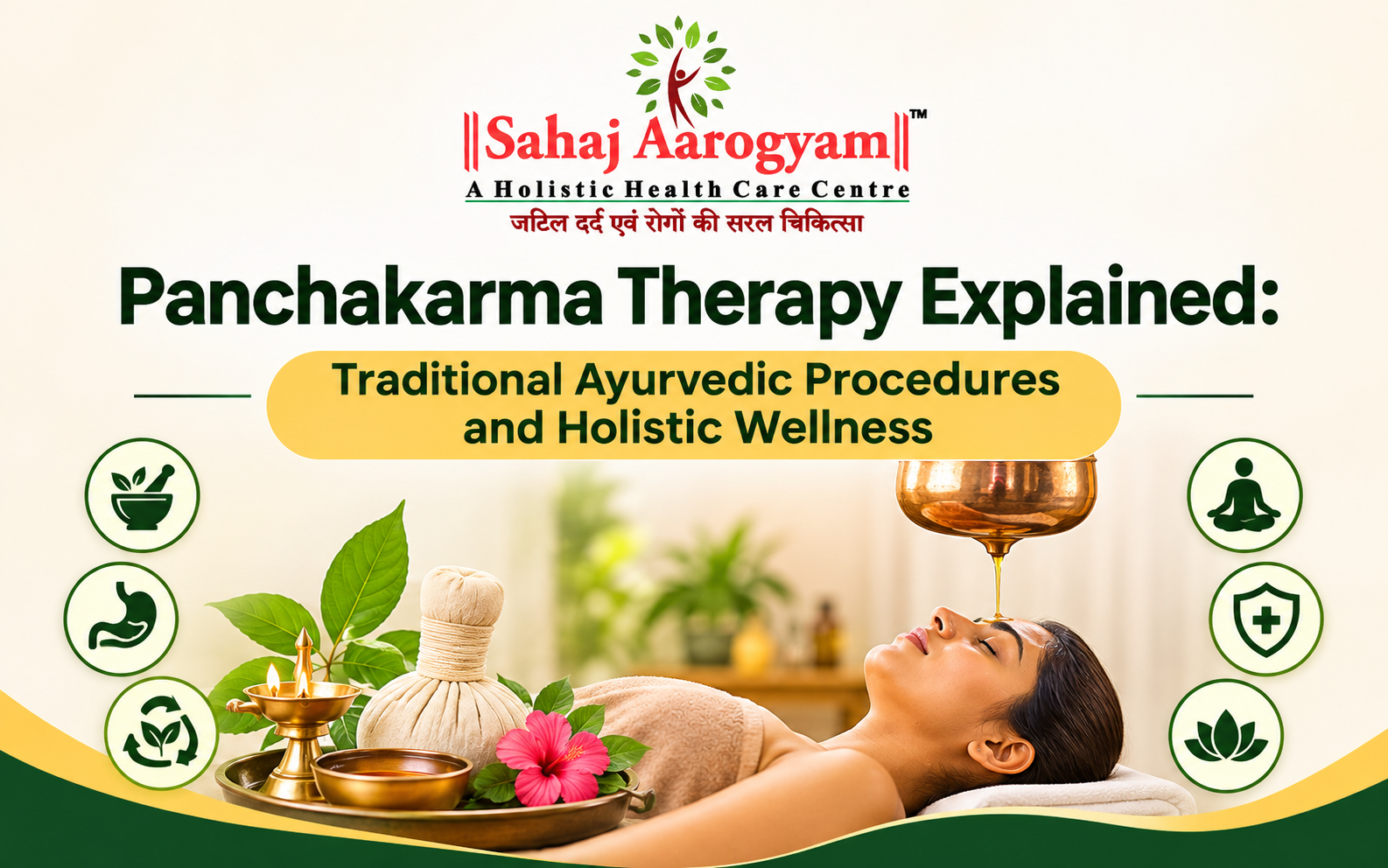
Ayurveda offers a traditional approach to healthcare that focuses on individual constitution, nutrition, lifestyle and therapeutic practices. Among its well-known treatment systems, Panchakarma holds an important place.
Panchakarma is a specialised group of traditional Ayurvedic procedures that are selected according to an individual's health condition and practitioner assessment. It is not simply a massage or general detox programme. Some procedures involve specific preparations, close supervision and careful consideration of medical suitability.
People searching for a Panchkarma Centre in Indore often want to understand its procedures, potential benefits and the importance of professional guidance.
Sahaj Aarogyam, Indore, offers traditional Ayurvedic and Kerala Panchakarma-related services for individuals interested in exploring complementary healthcare approaches.
What Is Panchakarma?
Panchakarma is a traditional Ayurvedic treatment system involving five principal procedures. The term combines two Sanskrit words: Pancha, meaning five, and Karma, meaning procedures or actions.
Traditional Panchakarma is intended to address specific health concerns through a structured process involving preparation, selected procedures and post-treatment care.
The exact programme varies according to the individual's condition, age, health status and assessment by a qualified Ayurvedic practitioner.
Panchakarma should not be considered a universally necessary detoxification treatment or a substitute for evidence-based medical care.
The Five Traditional Panchakarma Procedures
1. Vamana
Vamana is a traditional therapeutic procedure involving medically supervised induced therapeutic emesis.
It is considered only in selected cases under appropriate Ayurvedic supervision. It is not a general wellness procedure and may involve significant risks if performed incorrectly.
2. Virechana
Virechana is a traditional purgation procedure involving selected preparations to induce controlled bowel evacuation.
The process requires proper assessment, preparation and monitoring. It is not suitable for everyone.
3. Basti
Basti is a traditional Ayurvedic procedure involving the administration of selected preparations through the rectal route.
Different forms are described in Ayurveda. Its suitability and method must be determined by a qualified practitioner.
4. Nasya
Nasya involves administering selected preparations through the nasal route.
The procedure requires appropriate assessment and professional guidance, particularly for individuals with respiratory or other medical concerns.
5. Raktamokshana
Raktamokshana is a traditional procedure involving bloodletting techniques. It is not appropriate for routine self-care and requires specialist assessment, proper training and strict infection-control practices.
Not every individual requires all five procedures. The treatment plan depends on professional evaluation.
Preparatory Procedures in Panchakarma
Traditional Panchakarma programmes may include preparatory therapies before the main procedures.
Snehana
Snehana involves the use of oils or other suitable preparations in traditional Ayurvedic practice. Its method depends on the selected programme.
Swedana
Swedana refers to traditional sweating procedures, which may involve controlled heat or steam applications.
These preparatory methods are selected according to the practitioner's assessment and should be avoided or modified when medically unsuitable.
Common Ayurvedic Therapies Associated with Panchakarma
Some Ayurvedic centres also offer supportive traditional therapies.
Abhyanga: Traditional oil massage used for relaxation and physical comfort.
Shirodhara: Controlled pouring of a suitable liquid over the forehead.
Pizhichil: Traditional Kerala therapy involving warm medicated oil application.
Kizhi: Herbal bolus therapy involving selected warm preparations.
Kati Basti: Retaining warm medicated oil over the lower back.
These procedures are not identical to the five principal Panchakarma procedures, but they may form part of broader Ayurvedic wellness programmes.
Potential Role of Panchakarma in Ayurvedic Care
Panchakarma is traditionally used within Ayurveda as a structured therapeutic approach.
Its potential role depends on the procedure and individual circumstances.
A practitioner may consider it as part of traditional Ayurvedic management for selected concerns. However, scientific evidence for Panchakarma procedures varies, and claims of curing chronic diseases or removing unspecified toxins should be avoided.
Individuals should understand the possible risks, expected process and alternatives before agreeing to treatment.
Who Should Avoid or Take Special Precautions?
Panchakarma procedures can involve significant physiological effects.
People who are pregnant, elderly or medically fragile, or who have serious heart, kidney, liver or digestive conditions, may require special precautions or may not be suitable candidates.
People with dehydration, severe weakness, bleeding disorders or ongoing infections should receive medical evaluation before considering such procedures.
Never attempt therapeutic vomiting, purgation or other Panchakarma procedures at home.
How to Choose a Panchkarma Centre in Indore
Before selecting a centre, consider:
- Qualified Ayurvedic practitioner supervision.
- Detailed health and medical history assessment.
- Explanation of each proposed procedure.
- Appropriate hygiene and infection-control measures.
- Clear information about possible risks.
- Individualised preparation and aftercare.
- Appropriate medical referral when required.
A responsible centre should never promise guaranteed cures or insist that every person needs all five procedures.
Panchakarma Services at Sahaj Aarogyam, Indore
Sahaj Aarogyam is a holistic healthcare centre offering Ayurvedic consultation and traditional Kerala Panchakarma-related therapies.
Its Ayurveda Department includes traditional services such as Abhyanga, Shirodhara, Pizhichil, Pinda Sweda, Kati Basti, Janu Basti, Nasya and other Ayurvedic procedures.
Individuals interested in Panchakarma can enquire about available procedures, practitioner qualifications and suitability based on their health requirements.
Official Website: https://www.sahajaarogyam.com/
About Us: https://sahajaarogyam.com/sahaj-main/public/index.php/about-us
Google Business Profile: https://share.google/YeVYpNSmi6vLoMeJE
If you are searching for a Panchkarma Centre in Indore, contact Sahaj Aarogyam to understand the consultation process and available Ayurvedic services.
Conclusion
Panchakarma is a traditional Ayurvedic system involving specialised procedures that require individual assessment and professional supervision.
Understanding the five principal procedures, preparation methods, precautions and possible risks is important before choosing a programme.
Sahaj Aarogyam, Indore, offers traditional Ayurvedic therapies and consultation services for individuals interested in exploring Panchakarma-related care.
Frequently Asked Questions
1. What is Panchakarma?
Panchakarma is a traditional Ayurvedic system involving five principal therapeutic procedures selected according to individual assessment.
2. What are the five Panchakarma procedures?
The five traditional procedures are Vamana, Virechana, Basti, Nasya and Raktamokshana.
3. Is Panchakarma the same as a body massage?
No. Panchakarma is a specialised Ayurvedic treatment system. Massage may be included as a supportive therapy but is not equivalent to Panchakarma.
4. How long does Panchakarma treatment take?
Duration varies according to the selected procedures, preparation and individual health requirements.
5. Is Panchakarma suitable for everyone?
No. Medical history and individual health status must be assessed before treatment.
6. What is Virechana?
Virechana is a traditional Ayurvedic purgation procedure performed under professional supervision.
7. Is Panchakarma a detox treatment?
It is traditionally described as a purification system in Ayurveda. Claims about removing unspecified toxins should not be confused with scientifically established detoxification.
8. Can Panchakarma replace regular medical treatment?
No. It should not replace necessary medical treatment or prescribed medication.
9. Where can I find a Panchkarma centre in Indore?
You can enquire at Sahaj Aarogyam about its Ayurvedic consultation and available traditional therapies.
10. How can I enquire about Panchakarma at Sahaj Aarogyam?
Visit the official website or Google Business Profile for current contact information and service details.