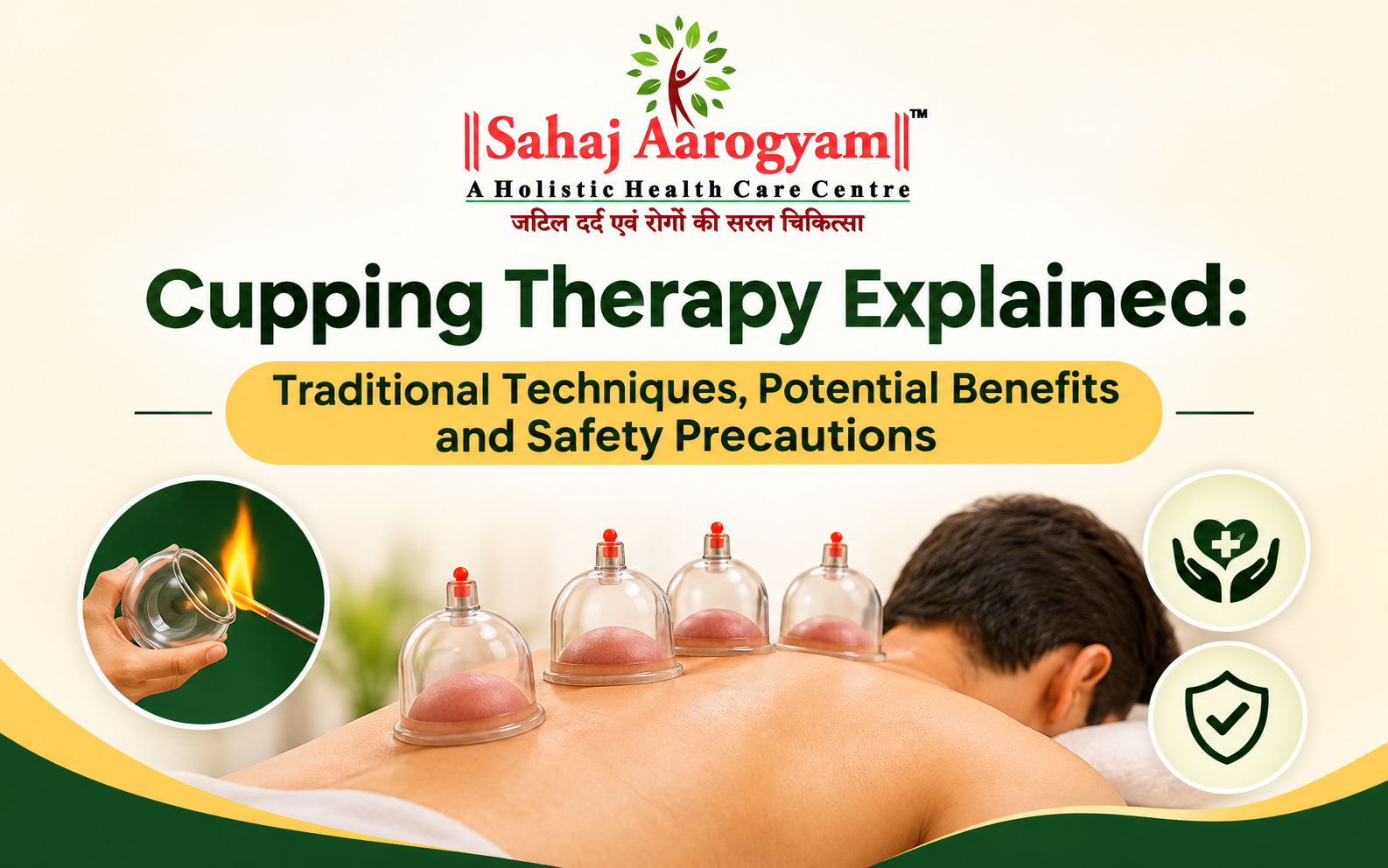
Muscle tension, physical fatigue, back discomfort and everyday stress can affect movement and quality of life. Many people explore complementary therapies alongside conventional healthcare to support relaxation and physical comfort.
Cupping therapy is a traditional practice that involves placing specially designed cups on the skin to create suction. It has been used in different traditional healthcare systems, including Unani medicine and traditional Chinese medicine.
Hijama is a form of cupping therapy that is traditionally associated with wet cupping, in which small superficial skin incisions are made after suction. It requires strict hygiene and professional supervision.
People searching for Cupping Therapy in Indore often want to understand the different techniques, potential benefits and precautions before considering a session.
Sahaj Aarogyam, Indore, offers Hijama and Unani cupping-related services as part of its complementary healthcare department.
What Is Cupping Therapy?
Cupping therapy is a traditional technique in which cups are placed on selected areas of the body to create negative pressure.
The suction may lift the skin and superficial tissues into the cup. Cups may be made from different materials, including glass, plastic or silicone.
The procedure, duration and suction intensity depend on the technique and the individual's health requirements.
Cupping is considered a complementary therapy. Scientific evidence for its effectiveness is limited or mixed for many conditions, and it should not replace medical treatment.
Different Types of Cupping Therapy
1. Dry Cupping
Dry cupping involves creating suction inside a cup placed on the skin.
No cuts or blood removal are involved. Cups may remain in position for a controlled period according to the practitioner's technique.
2. Wet Cupping or Hijama
Wet cupping involves an initial suction process followed by small superficial skin incisions and further suction.
Because it involves breaking the skin and potential blood exposure, strict infection-control procedures are essential.
It should only be performed by an appropriately trained practitioner using sterile, single-use equipment.
3. Moving Cupping
Moving cupping involves applying a suitable lubricant before gently moving a cup over the skin.
This technique may be used in selected traditional massage settings. The suction should remain controlled to avoid skin injury.
4. Silicone Cupping
Silicone cups are flexible and can be compressed manually to create suction.
They may be used in certain dry or moving cupping techniques. Hygiene and individual skin sensitivity remain important.
Potential Benefits of Cupping Therapy
Cupping therapy has been studied for selected musculoskeletal complaints, although evidence remains limited and results vary.
Temporary Muscle Comfort
Some people report temporary comfort after cupping sessions for muscular tension. It may be explored as a complementary relaxation approach.
Relaxation
The therapy may provide a relaxing experience for some individuals when performed appropriately.
Complementary Pain Management
Research has explored cupping for certain types of pain, but the quality of evidence is variable. It should not replace appropriate diagnosis and treatment.
Traditional Wellness Practice
Cupping has a long history in different traditional healthcare systems and continues to be used as a complementary wellness practice.
There is insufficient reliable evidence to claim that cupping removes toxins, purifies blood or cures chronic diseases.
What Happens During a Cupping Therapy Session?
A supervised session generally includes:
Initial Consultation: The practitioner discusses medical history, skin conditions, symptoms and previous treatments.
Area Selection: Suitable treatment areas are identified according to individual requirements.
Preparation: The skin and equipment are prepared using appropriate hygiene procedures.
Cup Application: Selected cups are applied with controlled suction.
Monitoring: The practitioner observes the skin response and checks the individual's comfort.
Aftercare: The practitioner explains skin care and precautions after the session.
The duration and number of sessions depend on the individual and the type of cupping being considered.
Understanding Marks After Cupping
Cupping can leave circular marks on the skin. These marks may appear red, purple or darker than the surrounding skin.
They are generally related to local changes in blood flow and small blood vessels near the skin surface.
The appearance and duration vary between individuals. Cupping marks should not automatically be interpreted as evidence of toxins leaving the body.
Persistent pain, blistering, burns or signs of infection require medical attention.
Who Should Avoid or Take Precautions?
Cupping may not be suitable for everyone.
People with the following conditions should seek medical advice before considering therapy:
- Bleeding disorders or easy bruising.
- Use of blood-thinning medication.
- Severe anaemia.
- Active skin infections or open wounds.
- Fragile skin or significant vascular problems.
- Certain heart or circulatory conditions.
- Pregnancy, depending on the proposed treatment area and technique.
Wet cupping carries additional risks, including bleeding, infection, scarring and anaemia with repeated procedures.
It should never be performed using shared or improperly sterilised instruments.
How to Choose a Cupping Therapy Centre in Indore
Before choosing a centre, consider:
- Practitioner training and relevant experience.
- Proper medical history assessment.
- Sterile, single-use equipment where skin is broken.
- Appropriate infection-control practices.
- Clear explanation of possible side effects.
- Individual suitability assessment.
- Proper aftercare guidance.
Avoid centres making guaranteed claims about curing diseases or removing toxins.
Hijama and Cupping Therapy at Sahaj Aarogyam, Indore
Sahaj Aarogyam is a holistic healthcare centre in Indore offering different complementary healthcare and wellness services.
Its Hijama and Unani Cupping Therapy Department provides an opportunity for individuals to enquire about traditional cupping approaches and available services.
Before choosing a session, individuals should discuss their health history, medications, skin conditions and expectations with the practitioner.
The centre's team can provide information about current service availability, practitioner qualifications and consultation arrangements.
Official Website: https://www.sahajaarogyam.com/
About Us: https://sahajaarogyam.com/sahaj-main/public/index.php/about-us
Google Business Profile: https://share.google/YeVYpNSmi6vLoMeJE
If you are searching for Cupping Therapy in Indore, contact Sahaj Aarogyam to enquire about Hijama and related services.
Conclusion
Cupping therapy is a traditional complementary practice involving controlled suction applied to selected areas of the body. Dry cupping and wet cupping are different procedures with different safety requirements.
Although some individuals explore cupping for muscular discomfort and relaxation, scientific evidence varies and the therapy is not a replacement for medical care.
Choosing a properly trained practitioner, maintaining strict hygiene and understanding possible risks are essential.
Sahaj Aarogyam, Indore, offers an opportunity to enquire about Hijama and Unani cupping-related services as part of its holistic healthcare approach.
Frequently Asked Questions
1. What is cupping therapy?
Cupping therapy is a traditional technique that uses specialised cups to create suction on selected areas of the skin.
2. What is Hijama therapy?
Hijama is traditionally associated with wet cupping, which involves suction and small superficial skin incisions.
3. What is the difference between dry and wet cupping?
Dry cupping uses suction without breaking the skin, while wet cupping involves superficial incisions and additional suction.
4. Can cupping help with muscle pain?
Some individuals report temporary comfort, but scientific evidence is limited and results vary.
5. Are cupping marks normal?
Temporary circular marks can occur after cupping. Persistent pain, blistering or infection is not normal and requires medical attention.
6. Is cupping therapy safe?
It may carry risks such as bruising, skin irritation and infection. Wet cupping has additional bleeding-related risks.
7. Who should avoid wet cupping?
People with bleeding disorders, severe anaemia, certain skin conditions or blood-thinning medication use should seek medical advice before considering it.
8. How long does a cupping session take?
Duration depends on the technique, treatment area and individual assessment.
9. Where can I find cupping therapy in Indore?
You can enquire at Sahaj Aarogyam about its Hijama and Unani cupping-related services.
10. How can I enquire about Hijama at Sahaj Aarogyam?
Visit the official website or Google Business Profile for current contact information and service details.