
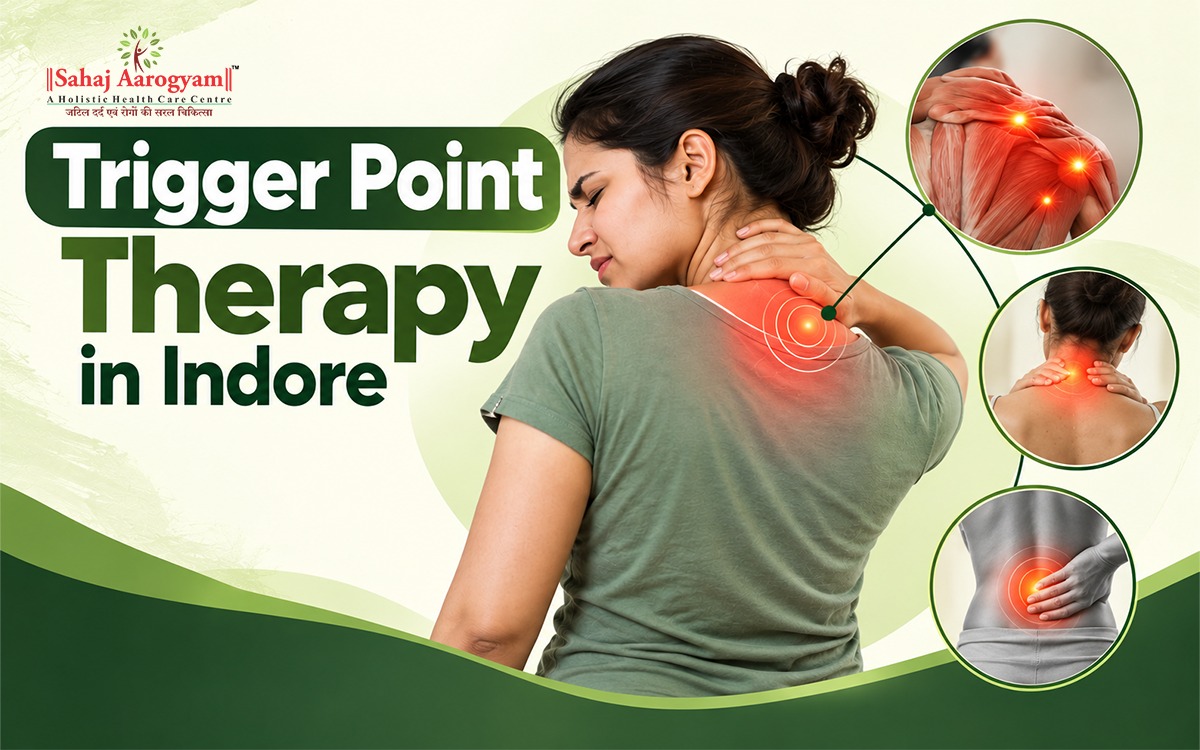
Muscle tightness can make everyday activities uncomfortable. You may notice a stiff shoulder after working at a desk, tenderness around the upper back, or a tight muscle that makes turning your neck difficult. These symptoms can sometimes be associated with sensitive areas within a muscle, commonly called trigger points.
For people exploring Trigger Point Therapy in Indore, understanding the possible causes of muscle discomfort is an important first step. Treatment should focus on the individual's symptoms, movement, daily activities and overall health rather than relying on a single technique.
At Sahaj Aarogyam, an integrated healthcare approach brings together physiotherapy, rehabilitation and selected complementary therapies according to individual needs.
What Are Muscle Trigger Points?
Trigger points are sensitive areas within a muscle that may feel tender when pressed. Some people describe them as knots or tight bands. Pressure on these areas may reproduce local discomfort and, in certain cases, pain in another area.
Muscle tenderness does not always indicate a trigger point. Joint problems, nerve irritation, injuries and other medical conditions can produce similar symptoms. Therefore, an appropriate assessment is important before selecting a treatment.
Common Reasons for Muscle Tightness
Muscle discomfort can develop for several reasons, including:
· Prolonged sitting: Remaining in one position for long periods may contribute to stiffness and reduced movement.
· Repetitive activities: Repeated movements at work, during exercise or while using devices may overload particular muscles.
· Sudden increases in exercise: Increasing training intensity too quickly can leave muscles sore or irritated.
· Poorly managed recovery: Inadequate rest between demanding activities may contribute to persistent discomfort.
· Stress and tension: Stress can influence muscle tension, sleep and the way people experience pain.
· Previous injuries: An injury may affect movement patterns and place additional demands on surrounding muscles.
The cause varies from person to person. Persistent or recurring symptoms deserve an assessment instead of repeated self-treatment.
How Is Trigger Point Therapy Used?
Trigger point therapy generally refers to techniques intended to address sensitive, tight areas of muscle. Depending on the assessment and the practitioner's training, care may include manual pressure, soft-tissue techniques or other approaches.
The aim is to help manage discomfort and support movement where appropriate. However, results vary, and no single technique works for every person.
Assessment Before Treatment
A practitioner reviews the location and duration of symptoms, movement limitations, relevant medical history and activities that worsen or relieve discomfort.
Appropriate Manual Techniques
A trained practitioner may use selected hands-on techniques when suitable. Pressure should be adjusted to the person's condition and comfort. Forceful treatment is not automatically more effective.
Movement and Exercise
Gentle mobility work, stretching where appropriate and progressive strengthening may support function. The exercises should match the person's abilities and the underlying problem.
Posture and Activity Guidance
Small adjustments to workstation setup, movement breaks, exercise load and recovery habits may help reduce repeated strain.
Progress Review
The treatment plan should be reviewed according to changes in pain, movement and daily function. If symptoms do not improve, the practitioner may recommend further medical evaluation.
Trigger Point Therapy, Physiotherapy and Acupressure: What Is the Difference?
These approaches are not interchangeable, although they may sometimes be considered together.
Trigger point therapy focuses on sensitive areas of muscle and may form one part of a broader treatment plan.
Physiotherapy addresses movement, strength, flexibility and physical function. Depending on the assessment, it may include therapeutic exercise, manual therapy and rehabilitation.
Acupressure applies pressure to selected points on the body. It is a complementary approach, and its suitability depends on the individual's symptoms and health circumstances.
At Sahaj Aarogyam, these options can be considered within an integrated care plan when clinically appropriate. The choice should depend on the assessment rather than an assumption that every type of muscle pain needs the same therapy.
Explore the physiotherapy services at Sahaj Aarogyam and its alternative therapies to learn more about the available approaches.
Can Trigger Point Therapy Help With Neck, Shoulder or Back Discomfort?
Some people explore muscle-focused treatment for local tenderness and tightness around the neck, shoulders or back. However, similar symptoms can arise from different causes, so treatment should not be selected based on the location of pain alone.
For example, shoulder discomfort may relate to a muscle strain, a joint condition or a problem involving the neck. Back discomfort may involve muscles, joints or nerves. A suitable assessment helps determine whether trigger point techniques are appropriate or whether another approach is needed.
Sahaj Aarogyam provides integrated care for movement-related concerns. Depending on the assessment, a plan may include physiotherapy, rehabilitation and complementary therapies. Learn more about its back pain treatment approach.
What Can You Do Between Sessions?
Everyday habits can support comfort and movement alongside appropriate care.
· Take regular movement breaks during long periods of sitting.
· Increase exercise intensity gradually instead of making sudden changes.
· Follow a suitable mobility and strengthening routine.
· Maintain a comfortable workstation and avoid staying in one position for too long.
· Allow adequate recovery after demanding physical activity.
· Avoid repeatedly pressing a painful area with excessive force.
Stop an activity if it significantly worsens your symptoms. Avoid self-treatment over an area that is swollen, bruised, injured or unusually painful without professional guidance.
When Should You Seek Medical Advice?
Arrange an assessment if muscle pain persists, repeatedly returns or limits your daily activities. Seek urgent medical care for severe or rapidly worsening pain, significant swelling, fever, new or progressive weakness, substantial numbness or symptoms following a serious injury.
Chest discomfort, breathing difficulty or sudden neurological symptoms require emergency evaluation rather than massage or complementary therapy.
People with bleeding disorders, reduced skin sensation, significant medical conditions or medicines that affect blood clotting should discuss treatment suitability with a qualified healthcare professional before undergoing manual or complementary therapies.
Personalised Muscle Pain Care at Sahaj Aarogyam
Managing recurring muscle discomfort may require more than treating the painful area. Understanding contributing activities, movement limitations, recovery habits and possible underlying conditions can help guide appropriate care.
Sahaj Aarogyam in Indore offers physiotherapy, rehabilitation, acupressure and other complementary therapy options within an integrated healthcare setting. A consultation can help determine which approach, if any, is appropriate for your needs. Treatment outcomes vary, and no particular therapy can guarantee relief.
To explore the centre and its services, visit the official Sahaj Aarogyam website or its Google Business Profile.
Frequently Asked Questions
1. What is trigger point therapy?
Trigger point therapy uses selected techniques to address sensitive areas within muscles. It may be included in a broader plan to manage discomfort and improve movement when appropriate.
2. Is trigger point therapy the same as a massage?
No. Massage is a broad category of hands-on techniques, while trigger point therapy specifically targets sensitive areas of muscle. The techniques used depend on the practitioner's training and assessment.
3. Can trigger points cause neck and shoulder discomfort?
Sensitive muscle areas may contribute to neck or shoulder discomfort, but other conditions can cause similar symptoms. An assessment helps identify the appropriate next steps.
4. Can physiotherapy be combined with trigger point therapy?
Depending on the condition, a physiotherapist may include suitable manual techniques alongside exercises and movement guidance. The treatment plan should be individualised.
5. Where can I explore muscle pain treatment in Indore?
Sahaj Aarogyam offers physiotherapy, rehabilitation and complementary therapy services in Indore. Consultation can help determine whether these services are suitable for your symptoms.
6. How long does trigger point therapy take to work?
The response varies by person and the underlying cause of muscle discomfort. A qualified practitioner can review progress and adjust the treatment plan when needed.
7. Can trigger point therapy help with muscle stiffness caused by sitting for long hours?
It may help some people manage muscle discomfort, depending on its cause. Movement breaks, ergonomic adjustments and suitable exercises can also support better mobility.
8. Is trigger point therapy suitable for everyone?
No. Its suitability depends on a person's symptoms, medical history and health conditions. Professional assessment is recommended, particularly after an injury or when symptoms are unexplained.
9. Can acupressure and physiotherapy be included in the same treatment plan?
They may be considered together when appropriate. A personalized plan should reflect the person's condition, movement needs and treatment goals, with each approach selected carefully.
10. Where can I explore trigger point therapy and physiotherapy in Indore?
Sahaj Aarogyam offers physiotherapy, rehabilitation and complementary therapy services in Indore. Contact the Centre to discuss your concerns and determine which services may be suitable.